


Natural Gas potentially a double-edged sword in Morrisey's 50 by 50 plan
Robert Fields | WVOW News
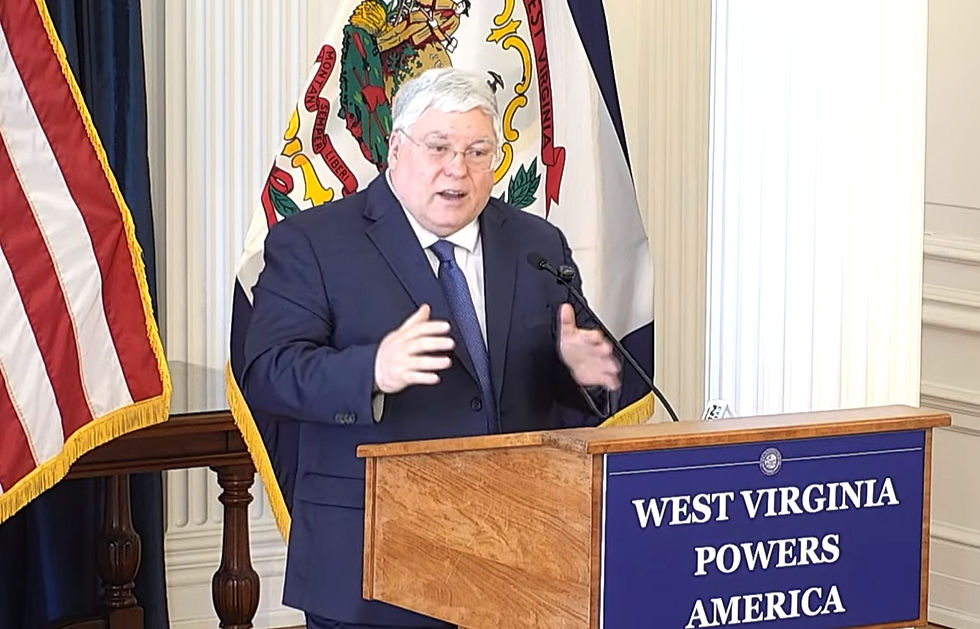
WEST VIRGINIA Natural gas is expected to play a major role as West Virginia works to expand electricity production to meet Governor Patrick Morrisey’s goal of reaching 50 gigawatts by 2050.
Speaking on WAJR’s Talk of the Town, Gas and Oil Association of West Virginia Executive Director Charlie Burd said the state has significant untapped natural gas capacity that could support new power generation while helping lower utility rates. Several natural gas-fired power plants are already planned or under construction, with additional projects still in development.
“Thousands of jobs that come with these construction projects,” he said. “FirstEnergy alone was 3,200 jobs at peak and the Wolf Summit project will create several hundred.”
West Virginia is the fifth-largest natural gas producer in the nation, with about 90 percent of its production currently shipped out of state. The state holds the third-largest natural gas reserves and stores roughly six percent of the nation’s supply, positioning it to support expanded in-state power generation.
Industry officials say the sector already supports more than 80,000 jobs, with thousands more expected as new power plants are built. Projects announced include additions in Harrison, Doddridge, and Monongalia counties, along with expanded capacity in Clarksburg.
Burd said increased production and consumption could help reduce commodity prices and utility bills, while also generating severance tax revenue for the state. He said growing demand from power generation, including energy needs tied to data centers and artificial intelligence, is expected to drive natural gas use in the years ahead.
However, the price of natural gas has been up and down lately, while energy prices across the board seem to be on the rise. A recent report from Climate Power attributes rising costs, in part, to the very data centers that Burd claims will play a role in lowering prices. Another factor, the report says, is the demand for natural gas, not domestically, but rather overseas.
The report finds the price of electricity has increased 13% across the country this year. Aging infrastructure and regulations get some of the blame. Other factors include the artificial intelligence industry and its data centers, which can demand as much electricity as a small city, and the end of tax credits for solar, wind and other renewable energy sources. The report also claims that the cost of natural gas is expected to rise sharply due to companies selling some of their product overseas, where they can fetch higher prices.
West Virginia has maintained the 14th lowest electricity prices in the nation thanks to its abundance of coal and natural gas. However, along with every other state, those prices have been steadily rising year over year. According to data from the Consumer Advocate Division, the State Corporate Commission and Appalachian Power, the price for 1,000 kilowatt/hours of residential power has risen by just over 88% over the past ten years, from $93.77 per month in 2015 to $176.43 per month as of December 12th, 2025.
According to data gathered by WVU’s John Chambers College of Business and Economics, the average household income doesn't keep up with those rising energy costs.

The college cites personal income grown statistics from the U.S. Bureau of Economic Analysis, which reports that from 2013 to 2023, West Virginia’s southern counties saw little to no income growth. In that time frame, Mingo County saw personal income actually drop on average, while Logan, Lincoln, Boone, Wyoming and McDowell counties saw anywhere between zero and 14.9% personal income growth per capita.
The largest personal income growth in that time was reported in the counties of Wood, Ritchie, Doddridge, Tyler, Wetzel, Ohio, Pocahontas, Pendleton, Tucker and Hardy, with growth at or above 30%.
The state's natural gas future may depend on whether expansion can balance energy independence with affordability. For now, that balance looks pretty uncertain, caught between the promise of lower costs and the pressure of global demand.
While supporters of Governor Morrisey's 50 by 50 plan see it as a path to growth, critics like Logan County Senator Rupie Phillips fear the benefits may not reach those ratepayers that are still grappling with rising bills. As Phillips put it back when the state Legislature was debating the Power Generation and Consumption Act, the main concern is that "mamaw can't afford it."


